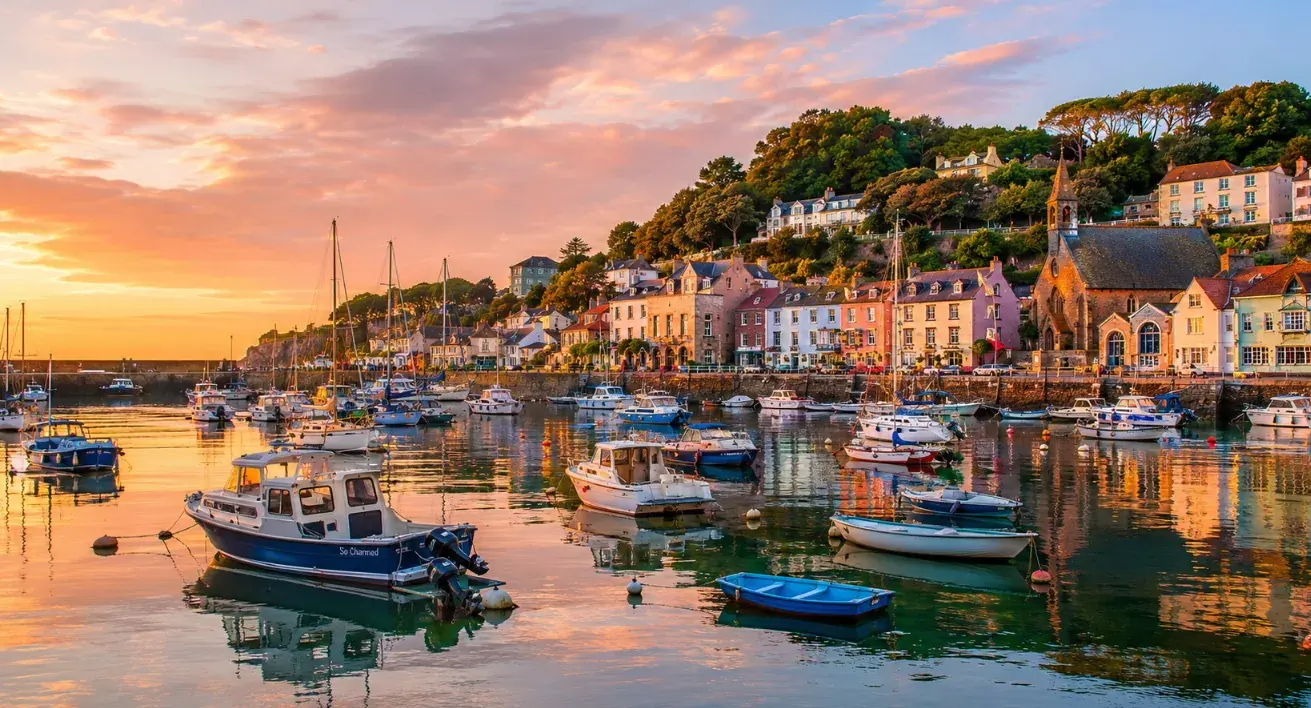
St Aubin's harbour at sunset
Practical info

Everything boring, sorted.

Getting to Jersey by air

Jersey Airport (JER) sits a short hop west of St Helier. Direct flights run from most UK regional airports plus several European cities, and frequency rises sharply in summer.

  • Allow extra time in peak season — security queues can be long.
  • Buses and taxis connect the airport to St Helier in around 20 minutes.
  • Check the official airline site for hand-luggage rules; Jersey rules can differ from the UK.

Getting to Jersey by ferry

Ferries arrive at the Elizabeth Terminal in St Helier from Poole, Portsmouth and St Malo (France). Crossings range from around an hour by fast ferry to several hours on conventional sailings.

  • Bring photo ID — French sailings require a passport.
  • Foot-passenger and car options are both available; book ahead in summer.
  • Check Ports of Jersey before travelling for live updates.

Getting around by bus

LibertyBus operates the island's bus network, with frequent services to most beaches, attractions and parishes from St Helier's Liberation Station.

  • Day and multi-day Avanchi cards give unlimited travel and good value.
  • Pay contactless on board for single fares.
  • Buses run less frequently on Sundays and in winter — check timetables.

Driving in Jersey

The island speed limit is 40 mph (around 65 km/h), with 30, 20 and 15 mph zones common. Roads are narrow and signage is minimal — drive slowly and enjoy the lanes.

  • You can drive on a valid UK or EU/EEA licence; check rules for other countries.
  • Parking uses pay-cards in central St Helier; buy them at petrol stations and shops.
  • Green Lanes have a 15 mph limit and give priority to walkers, cyclists and horses.

ETA and travel documents

Jersey is a Crown Dependency, not part of the UK. Entry rules can differ from the UK — non-visa-national visitors may need an ETA (Electronic Travel Authorisation).

  • Bring a valid passport. EU national ID cards are not always accepted.
  • Check the Government of Jersey website well before travel.
  • EHIC / GHIC cards are not valid here — bring travel insurance.

Beach safety

Many Jersey beaches are lifeguarded in summer between flagged areas. Conditions can change quickly — particularly on the Atlantic-facing west coast.

  • Swim between the red-and-yellow flags.
  • Watch for rip currents at St Ouen's Bay and other surf beaches.
  • Follow lifeguard instructions; check beach forecasts before heading out.

Tides and causeways

Jersey has one of the largest tidal ranges in the world — up to around 12 metres. Tides shape every coastal day here, from where you can walk to where you can swim.

  • Check tide tables before exploring caves, rockpools or causeways.
  • Never attempt to walk to Elizabeth Castle or La Corbière as the tide rises.
  • Booked guides can take you safely onto the seabed on the Jersey Tidal Trail.

Emergency numbers

Dial 999 for all emergency services (police, fire, ambulance, coastguard). Jersey General Hospital is in St Helier.

  • Non-emergency police: dial 612612.
  • Pharmacies operate a rota for out-of-hours care — check posted notices.
  • Travel insurance is strongly recommended; GHIC is not accepted.

Accessibility tips

St Helier is mostly flat and walkable, and many beaches have hard promenades. Older castles, cliff paths and the Neolithic passage tomb at La Hougue Bie have significant access limitations.

  • Several beaches offer beach matting and accessible chairs in summer.
  • LibertyBus vehicles are low-floor and step-free.
  • Jersey Heritage sites publish access notes — check before visiting.

Money & payments

Jersey uses the Jersey Pound (JEP), pegged 1:1 with the British Pound (GBP). UK notes and coins are accepted everywhere; Jersey notes are not always accepted off-island, so spend or change them before you leave.

  • Card and contactless are accepted almost everywhere, including buses.
  • ATMs are widely available in St Helier and at the airport.
  • VAT does not apply — instead a 5% Goods & Services Tax (GST) is included in prices.
  • Tipping is appreciated but not expected — 10% is generous in restaurants.

Weather & best time to visit

Jersey enjoys one of the sunniest climates in the British Isles, with mild winters and warm — rarely hot — summers. The Atlantic keeps things changeable: pack layers and a light waterproof in any season.

  • June–September: warmest, busiest, longest opening hours.
  • May & October: quieter, still mild, beautiful light for photos.
  • Winter: many attractions close or run reduced hours; coast walks shine.
  • Average summer high ~21 °C; sea around 17–18 °C in August.

Language & local know-how

English is the everyday language and you'll see it on every sign and menu. French place names abound, and a small community still speaks the indigenous Norman language, Jèrriais.

  • Parish names are French (St Helier, St Brelade, St Ouen…).
  • 'La Mielle' = sand dunes, 'Le Mont' = the hill — useful when reading lanes.
  • Locals tend to say 'the island' rather than 'Jersey' in conversation.

SIM cards, roaming & wi-fi

Jersey is not in the UK or EU, so UK and EU mobile roaming plans often charge extra here. Check your plan before you travel — JT, Sure and Airtel are the local networks.

  • Many UK 'roam-like-at-home' plans exclude Jersey — read the small print.
  • Local PAYG SIMs are sold at JT and Sure shops in St Helier.
  • Free wi-fi is widely available in cafés, hotels and on LibertyBus.

Power, plugs & time

Jersey uses UK three-pin Type G plugs at 230 V / 50 Hz. The time zone is the same as the UK — GMT in winter, BST in summer.

  • Bring a UK plug adapter if you're travelling from outside the UK.
  • Most hotels provide hairdryers and have USB sockets in newer rooms.

Opening hours & seasonality

Many Jersey attractions, hotels and restaurants run reduced or seasonal hours outside summer. Sundays are still quieter than weekdays, with some smaller shops closed.

  • Always check opening times on the official website before travelling.
  • Last entry to castles and museums is usually 60–90 minutes before close.
  • Beach kiosks and surf-coast cafés are mostly April–October only.

Frequently asked questions

  • Jersey has its own entry rules and is not part of the UK. Many visitors who previously needed no document may now need an ETA (Electronic Travel Authorisation). Rules change — check the Government of Jersey website well before you travel.

  • The island is small. LibertyBus serves most beaches and villages from St Helier's Liberation Station, with day and multi-day Avanchi cards for unlimited travel. Walking around St Helier, St Aubin and harbour villages is easy, and many visitors mix the bus with a single day's car rental.

  • Not necessarily. Buses, walking and the occasional taxi cover most of the island, especially in summer. A car is useful if you want to chain north-coast stops, visit remote bays, or move quickly between several places in one day. Roads are narrow with low speed limits — drive gently.

  • St Brelade's Bay is the all-rounder favourite — turquoise water, sand, cafés and shelter. St Ouen's Bay is the dramatic 5-mile surf coast. For a calmer family day try Grève de Lecq on the north coast, and for photos head to Plémont Bay at low tide or the Royal Bay of Grouville.

  • Jersey Museum, the Maritime Museum, Jersey War Tunnels and the Occupation Tapestry Gallery are all good rainy-day picks. Add a long lunch at one of the harbour restaurants and the day is sorted. See our Rainy Day Ideas category for more.

  • Yes — Jersey is a strong family destination. Jersey Zoo, the rockpools at Grève de Lecq, the castle quest at Mont Orgueil, gentle walks in the National Park and seaside ice creams at Havre des Pas all work well with kids. Short transfers mean no long drives.

  • St Helier's nightlife is centred around the marina and Royal Square. The Drift at the Royal Yacht is good for cocktails, Blue Note Bar for live music, Chambers for a busy local pub, and harbour-front restaurants for a slower evening. Check listings before you go — venues change.

  • Jersey has one of the largest tidal ranges in the world — up to around 12 metres. The tide shapes where you can walk, swim and explore. Always check tide times for sites like Elizabeth Castle, La Corbière Lighthouse, Plémont caves and any seabed walks — the sea moves quickly.

A note on accuracy. This guide is designed to help you plan your trip. Opening times, prices, travel rules, transport and tide information can change. Always check official sources before travelling or booking.

Let our AI plan it for you

Tell us your days, style and how you'll get around — we'll do the rest.

Open AI Planner